Agnieszka Holland
2026
Director
She has provoked outrage, stirred controversy and been arrested for her convictions and films. Agnieszka Holland was the recipient of the 2026 International Honorary Dragon Award and visited the festival with a wildly anachronistic and playful film about Franz Kafka in her luggage.
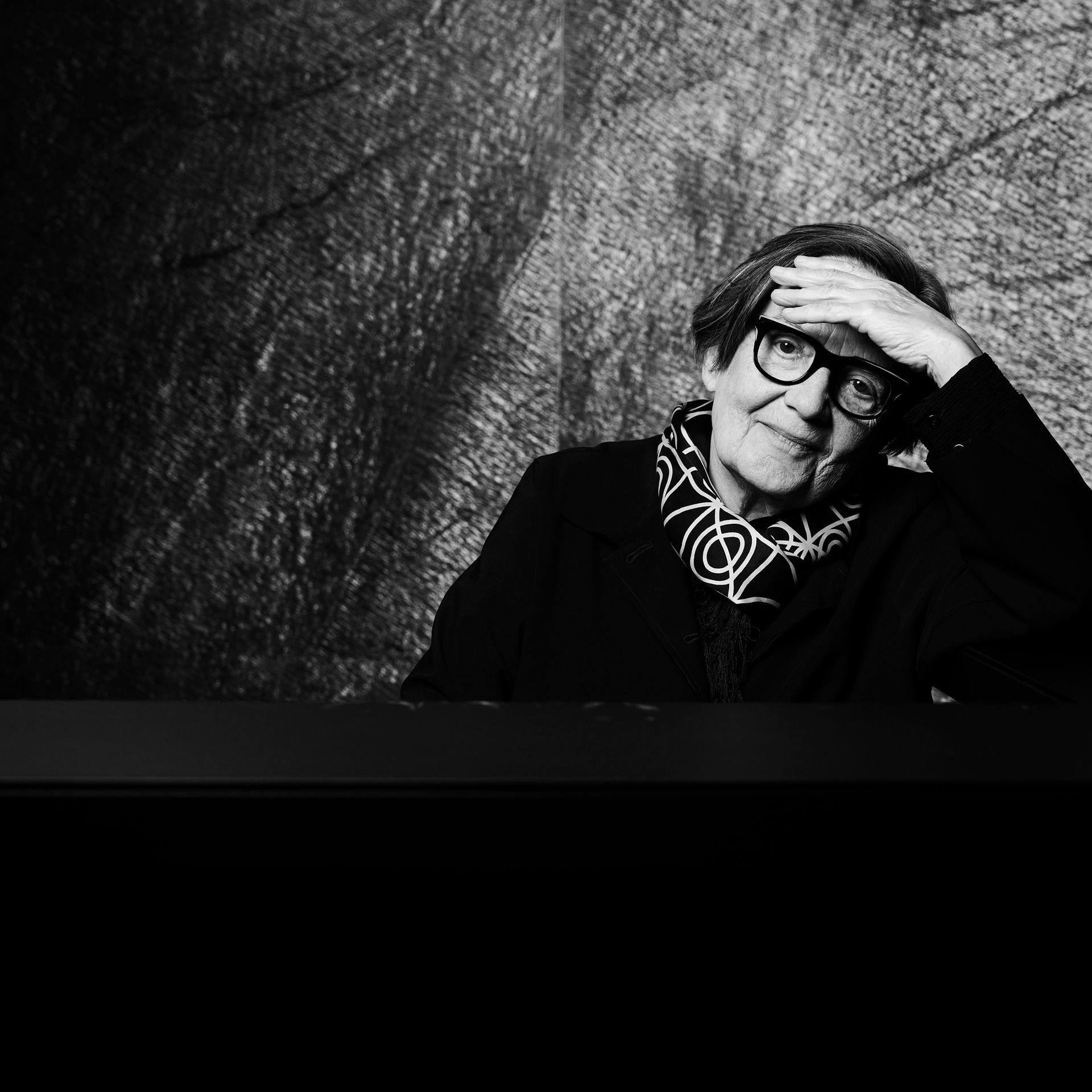
The recipient of the 2026 International Honorary Dragon Award was involved, in a small way, in the very first tentative moments of the Göteborg Film Festival. In 1979, the fledgling festival opened with Screen Tests, a film co-directed by three filmmakers, one of whom was Agnieszka Holland. Not long afterwards, she provoked the Polish communist regime so much with A Lonely Woman that the film was banned in her home country before it had even been screened. The authorities were not impressed by its social-realist portrayal of the harsh reality faced by a single mother under communism.
In 1981, martial law was abruptly imposed in Poland, making both that film and several of her earlier works politically impossible to show. However, Holland’s brother-in-law managed to arrange for a copy of A Lonely Woman to be smuggled out of the country, while the director herself went into exile in France.
Since then, she has provoked controversy many more times through her films and outspoken positions on a range of issues. Perhaps this is hardly surprising, given her complex family background. Her Catholic mother was a former journalist who took part in the Polish resistance movement and helped Jews during the Second World War. Her Jewish father lost his parents in the Holocaust and worked, among other things, as a journalist and communist activist until he was accused of espionage by the Soviet security services, arrested and died in their custody under unclear circumstances in the 1960s.
Holland herself was arrested while studying film in Czechoslovakia for supporting Czech dissidents during the Prague Spring of 1968. Now, several decades later, she seems to have shifted into an even higher gear when it comes to challenging the status quo and taking a clear stand against fascism, communism and political propaganda.
When her political thriller Mr. Jones was released in 2019, its portrayal of fake news and the responsibility of journalism already felt urgently relevant. Looking back, however, it almost seems as though Holland had been filming through a crystal ball. At its centre was the real-life journalist Gareth Jones, who in the 1930s first tried to warn the world about the alarming rise of fascism in Germany, before travelling to what is now Ukraine to bear witness to the Holodomor, the devastating famine that killed millions of people. Both Western and Eastern interests subsequently sought to suppress his reports and undermine his credibility for economic and political reasons.
In the uncompromising Green Border (2023), Holland captured, with quiet fury and deep human compassion, the plight of a Syrian refugee family caught in a brutal cycle of pushbacks between Belarus and Poland. Border guards on both sides force them back and forth through razor-sharp barbed-wire fences, dark forests and treacherous swamps. Holland subsequently drew comparisons with the unequivocal responsibility Europe assumed towards the refugees arriving from Ukraine.
Senior ministers in Poland’s national-conservative coalition compared the film to Nazi propaganda. A staggering accusation to level against someone who has spent decades investigating Europe's darkest chapters, probing historical and contemporary truths, and receiving several Oscar nominations for films such as Angry Harvest (1985), Europa Europa (1990) and In Darkness (2011).
Over the years, she has also explored a wide range of other cinematic territory. She adapted the Gothic children's classic The Secret Garden (1993), collaborated with Nobel laureate Olga Tokarczuk, Andrzej Wajda and Krzysztof Kieślowski, directed episodes of television series such as The Wire and House of Cards, and served as showrunner for her own HBO series, Burning Bush, to name just a few of her achievements.
Text: Emma Gray Munthe